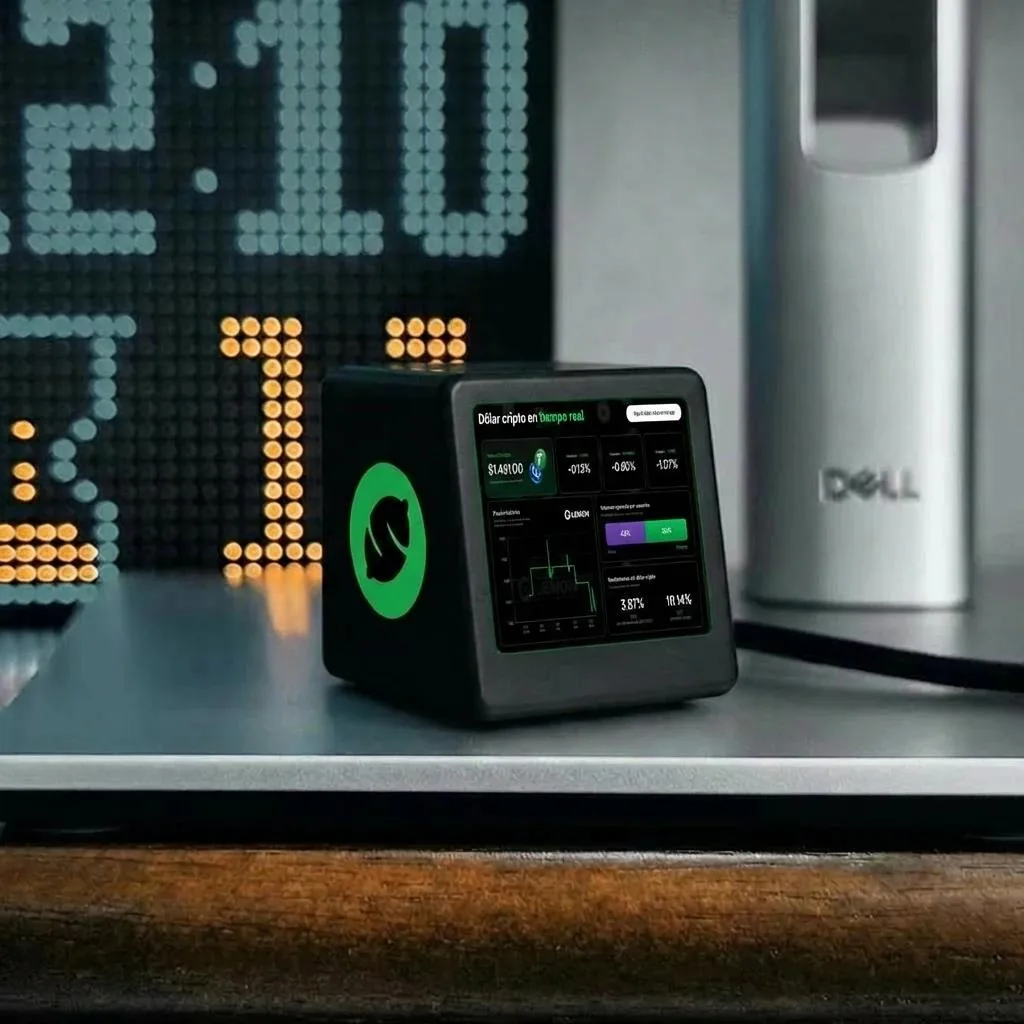
Lemon asked if a generated product image could become real. Joaquín modeled the enclosure; I built the firmware, integration, and print process. Together we turned the reference into working displays.
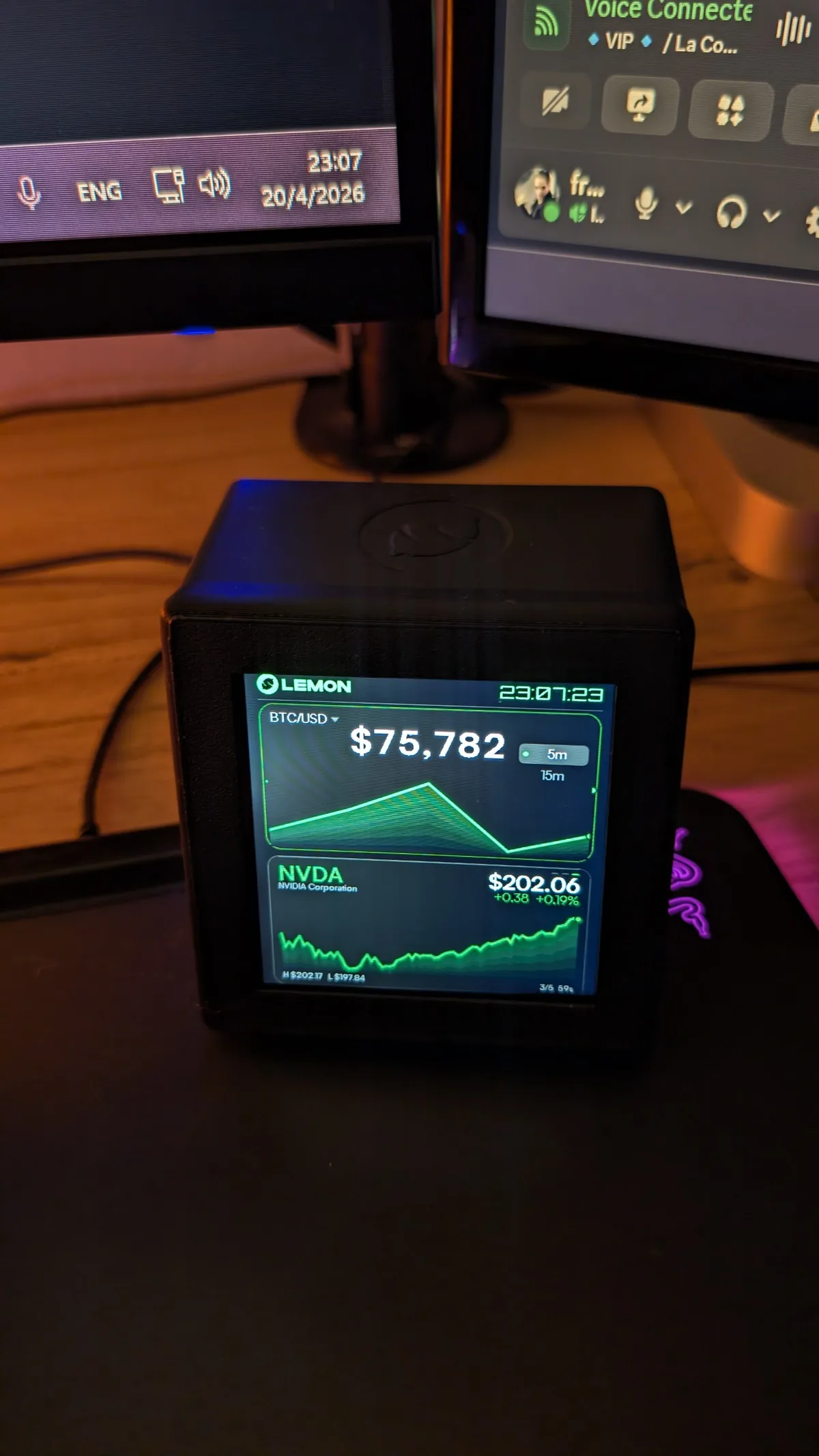
realPhysical Lemon Box running BTC and stock views.
At a glance
What I owned
Period
2026 to present
Role
Product, firmware, hardware integration, and print production
Team
Franco Ferreira and Joaquín, with the initial brief and reference supplied by Lemon
Users
Lemon and people using the connected market displays
Status
Working physical displays; public firmware in beta; Lemon Box Studio in development
Contribution
Joaquín modeled the enclosure. I wrote the firmware, integrated the ESP32-S3 display, ran the three 3D printers, printed the parts, and assembled the batch.
Tradeoff
Balance a readable 480 by 480 interface, live network data, touch, persistence, and reliable recovery inside a constrained device.
Evidence
Physical-device and enclosure photos, the generated reference supplied by Lemon, public firmware releases, source code, and STL files. The reference is labelled as direction, not product evidence.
Delivery
Firmware + hardware integration
Workshop
Three 3D printers
Hardware
ESP32-S3, 480 x 480 touch
Firmware
Public beta with OTA
Evidence map
How the idea became a device
The build started with a generated reference supplied by Lemon. Joaquín modeled the enclosure; Franco built the firmware, hardware integration, printing, and assembly. The shipped device reads live market data, while Lemon Box Studio remains in development.
Reference supplied by LemonGenerated image, not product evidence
Can this be made?
Physical resultLive firmware on the assembled device150 units
Joaquín
Enclosure model
Franco
Firmware, hardware integration, printing, and assembly
In developmentStudio editor and wireless device workflow
01
The question came before the product
Lemon sent the generated reference shown here and asked whether something like it could be built. The image established a direction. It did not prove an enclosure, electronics layout, interface, or working device.
referenceGenerated reference supplied by Lemon. This is the initial direction, not a photograph of the product.
02
A modeler and a three-printer workshop
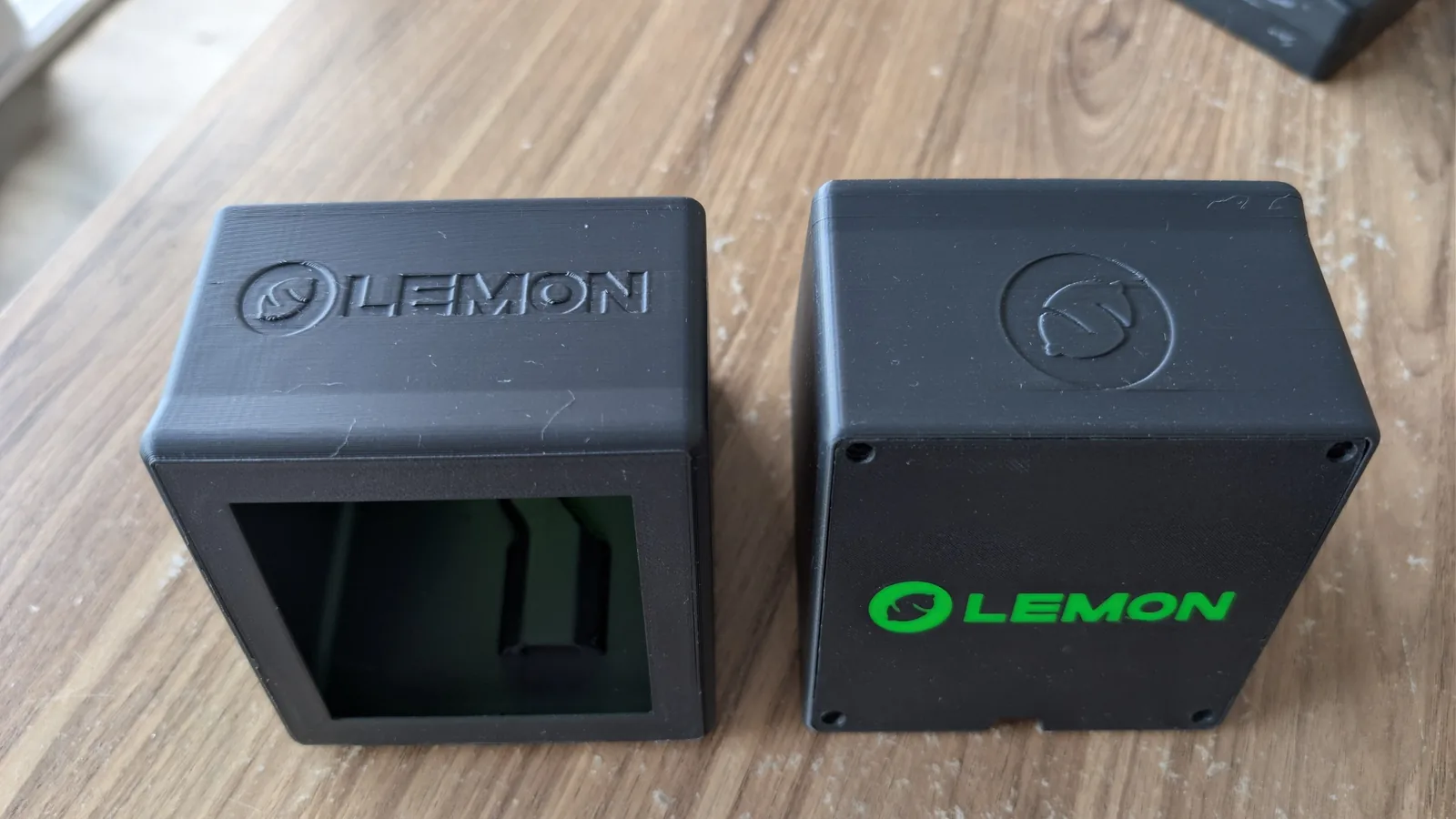
Joaquín is a close friend and a 3D modeler. He modeled the enclosure. I have three 3D printers as part of my maker practice, so I could print revisions, test the fit with the display and electronics, and feed physical constraints back into the next iteration.
realPrinted enclosure parts during a physical fit and branding iteration.
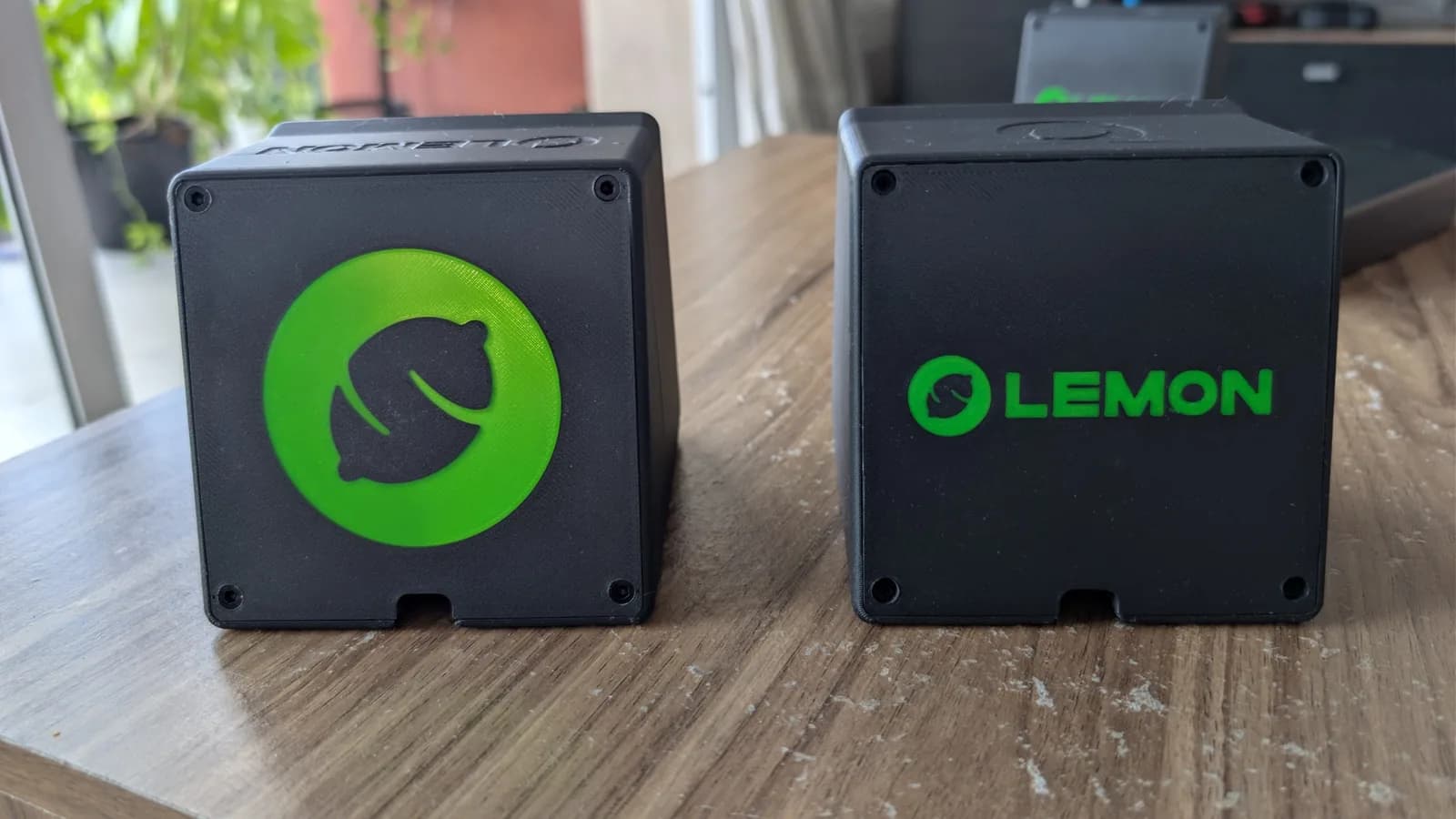
realPrinted enclosure panels with two Lemon branding treatments.
03
The software had to fit the object
Joaquín and I chose an ESP32-S3 touchscreen approach. I built the firmware and hardware integration: WiFi provisioning, rendering, touch gestures, NVS settings, audio alerts, network recovery, and public OTA updates. We then printed the enclosures and assembled the displays for Lemon.
recreatedThe shipped object joins the interface, data sources, firmware, device state, and OTA path.
04
Market data without another open tab
The running firmware shows BTC against USD, ETH, SOL, ARS, and gold, plus the Lemon USDC/ARS rate and a stock watchlist. It also supports paper predictions against live Polymarket markets and BTC movement. Predictions and score are stored on the device; there is no wallet and no funds are placed.
realPhysical device running BTC/USD and NVDA views.
05
The next tool is still in development
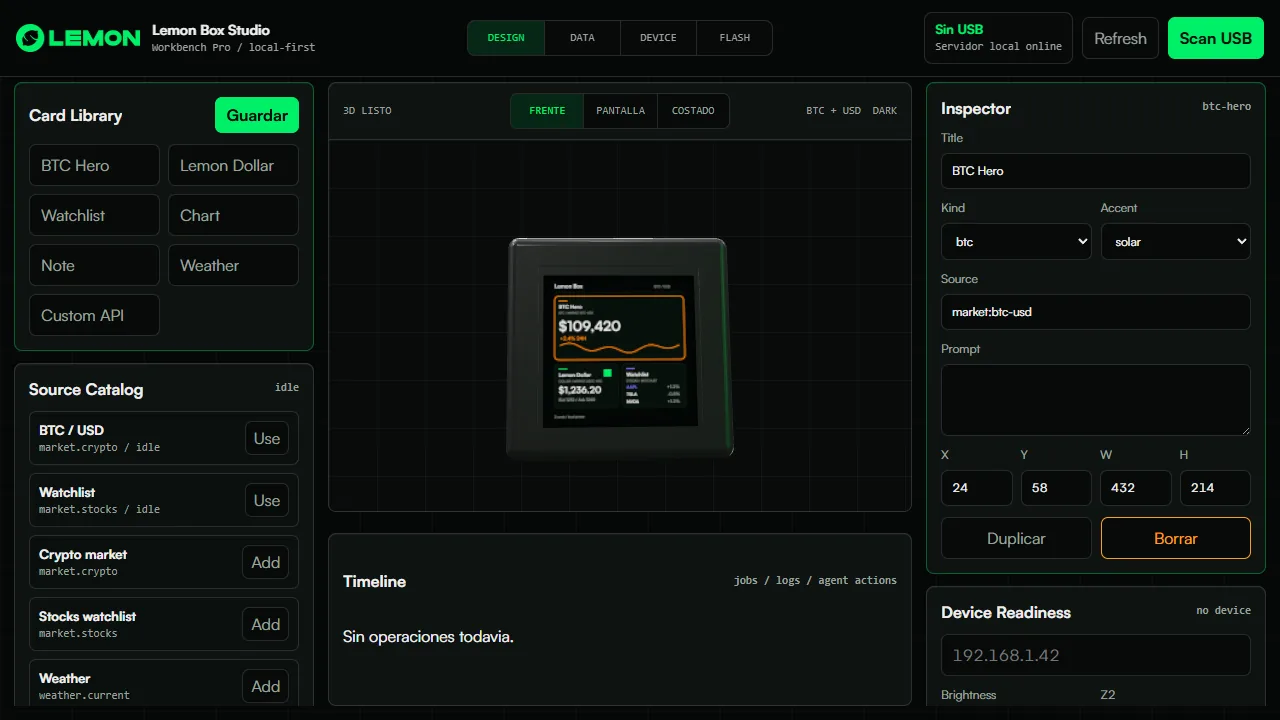
Lemon Box Studio is a local editor for arranging cards, previewing live data sources, pairing a device, changing settings, and preparing wireless updates. The current repository supports the editor workflow, but this page does not present Studio as a finished or deployed product.
prototypeCurrent local Studio interface. In development; not presented as a shipped product.